A New Track in Insect Cell Expression: High-Five (Hi-5) HCP Precision Quality Control Solution
BACKGROUD:
Origin: The insect cell expression system has emerged as one of the hosts for innovative drug development in recent years. Although it occupies a niche market, it offers specific advantages in terms of cost and functionality for certain drugs. Common insect cell lines include Sf9, Sf21, and High-Five.
The High Five cell is an ovarian cell line derived from the cabbage looper, Trichoplusia ni. It was established in 1992 at the Boyce Thompson Institute (BTI) from Trichoplusia ni (Tn) embryos. The clone number is 5B1-4, leading to its various designations: BTI-Tn-5B1-4, Tn-5B1-4, High 5, Hi-5, and Tn-5 [1]. Like Sf9 cells, High-Five cells are an insect cell line used for recombinant protein drug expression via baculovirus infection/transfection. However, High-Five cells produce significantly higher yields of recombinant proteins compared to Sf9 cells. A unique characteristic of High-Five cells is their frequent use in producing large quantities of small molecule RNAs, small interfering RNAs, and piRNA drugs [2-5]. During culture, we observed that these cells grow in a semi-suspension manner, resembling lymphoblasts, and tend to be loosely aggregated. The method for isolating the primary High-Five cell line is illustrated in Figure 1 below:
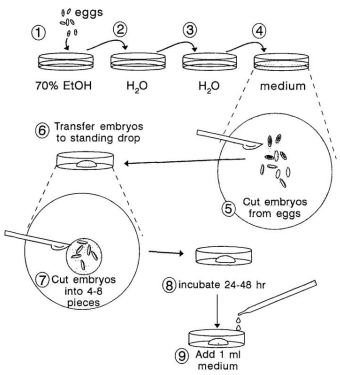
Figure 1
Initially, High-Five cells were isolated by collecting Trichoplusia ni eggs, sterilizing them with 70% ethanol, washing with sterile water, and placing them in a culture dish. The embryonic ovaries were dissected from the eggs, minced into tissue fragments, and cultured for 24-48 hours to obtain High-Five cells [6]. The cells appear loose, suspended, semi-adherent, and mostly spherical (Figure 2A). Figure 2B shows High-Five cells infected with eGFP baculovirus at 48 hours post-infection (hpt), visualized by confocal microscopy: nuclei stained blue (Hoechst), cell membranes stained red (CellMask™), and intracellular eGFP in green. These observations are consistent with those reported by Manon M. J. Cox
.png "High-Five_HCP_(2).png")
Figure 2
When using High-Five cells for recombinant drug expression, two primary methods are employed: Virus-Free Transient Gene Expression and the Baculovirus Expression Vector System (BEVS). The former utilizes PEI liposome transfection, while the latter uses baculovirus generated via homologous recombination (HR-bac, vector gene type BAC10:KO~1629,~ Δv-cath/chiA) for infection. Common tool vectors include pAC8 set, pAC8_MF set, and pOPIN set plasmids. The effect of baculovirus infection on Sf9 cells is shown in Figure 3. Infected cells exhibit a red fluorescence marker (Figure 3A), and Western blotting shows distinct bands (Figure 3B.
.png "High-Five_HCP_(3).png")
Figure 3
Key Features of the Insect Cell Expression System:
Although E. coli and CHO HCP expression systems remain the mainstream for large-molecule protein drugs, the insect cell system offers unparalleled advantages in terms of post-translational glycosylation modification, cost, yield, and genetic manipulability. We have summarized the advantages and future trends of insect cell expression [7] in Table 1.
Table 1
Dimension | Feature | Specific Content |
Key Advantages | Post-translational Modifications | Produces active eukaryotic proteins |
Glycosylation Characteristics | Simpler glycosylation pattern than mammalian cells; better antibody aggregation stability | |
Cost & Scalability | Significantly lower culture cost than mammalian cells | |
Biosafety | Lacks known human pathogens; already used in FDA-approved vaccine production | |
Primary Applications | Vaccines | Human vaccines, Virus-Like Particle (VLP) vaccines |
Antibodies/Fusion Proteins | Diagnostic or therapeutic antibodies, Fc-fusion proteins | |
Complex Proteins | Transmembrane proteins, secreted proteins, multi-subunit complexes | |
Basic Research | Structural biology (Cryo-EM), protein function studies | |
Main Limitations | Cell Lysis | Baculovirus infection leads to cell lysis, limiting production window |
Glycosylation Differences | Its glycosylation pattern differs from humans, requiring targeted humanization. | |
Future Directions | Virus-Free Systems | Promote transient transfection or develop stable cell lines |
Safe Sub-strains | Screen for "clean" Hi-5 sub-strains devoid of endogenous viruses | |
Genetic Engineering | Humanize glycosylation pathways; optimize yield and quality |
Furthermore, the common transfection/infection methods used in insect cells have their respective advantages and disadvantages depending on the application scenario [8]. These characteristics are detailed in Table 2 [8, 9], allowing researchers and manufacturers to choose based on their needs. Consequently, insect cell-produced vaccines like Cervarix® and Flublok®, as well as the therapeutic vaccine Provenge®, have been successfully launched due to their performance advantages [10, 11] (Table 3).
Table 2
Comparison Dimension | Virus-Free Transient Gene Expression | Baculovirus Expression Vector System (BEVS) |
Core Mechanism | Direct delivery of plasmid DNA containing the gene of interest into insect cells via chemical transfection (e.g., PEI) or physical methods for transient expression. | The target gene is recombined into the baculovirus genome, and the resulting recombinant virus efficiently delivers the exogenous gene into host cells via infection. The virus then drives protein expression and ultimately lyses the host cells to release progeny virus (or expressed products). |
Workflow & Time | Significantly shorter. Eliminates time-consuming steps of generating, amplifying, and titering recombinant virus (saving weeks). | Lengthy and cumbersome. Involves recombinant virus construction, plaque purification, and multiple rounds of amplification to achieve high-titer stocks. |
Impact on Host Cells | Minimal impact. No viral genome replication/expression; avoids virus-induced host cell lysis/apoptosis; cells remain viable longer. | Infection causes strong Cytopathic Effect (CPE), typically inducing apoptosis and eventual lysis 3-4 days post-infection, terminating protein expression. |
ost-Translational Modification Capability | Retains insect cell PTM capabilities without viral interference. | Retains insect cell PTM capabilities, but viral infection may interfere with host cell modification systems. |
Key Advantages | 1. Fast & Time-saving: Very short gene-to-protein timeline, ideal for rapid screening. | 1. Very High Expression: Strong viral promoters (e.g., polyhedrin, p10) drive target protein to a large percentage of total cellular protein. |
Main Limitations | 1. Cost & Scale Limitations: Large-scale transfection requires large amounts of plasmid and expensive reagents. | 1. Cell Lysis & Protein Degradation: Late-stage cell lysis releases proteases, potentially degrading the target protein. |
Table 3
Drug (Brand Name) | Type | Company | FDA Approval | Indication |
Cervarix® | Human Papillomavirus (HPV) Vaccine | GSK | 2009 | Prevention of cervical cancer caused by HPV |
Flublok® | Recombinant Influenza Vaccine | Protein Sciences | 2013 | Prevention of seasonal influenza |
Provenge® | Prostate Cancer Therapeutic Vaccine | Dendreon | 2010 | Treatment of metastatic prostate cancer |
The most common insect cell lines are High-Five, Sf9, and Sf21.Sf9 and Sf21 originate from the pupal genus/species of Spodoptera frugiperda, exhibit a round morphology, and have well-characterized genomic and transcriptomic profiles. However, their expression levels are lower than those of the Trichoplusia ni-derived High-Five cells. Furthermore, their glycosylation-related genes are more similar to those of Sf21 [12-16]. More detailed differences in cell line characteristics are presented in Tables 4 and 5.
Table 4
Comparison Dimension | High-Five | Sf9 | Sf21 |
Species | (Trichoplusia ni) ovary tissue | Spodoptera frugiperda pupal ovary tissue | Spodoptera frugiperda pupal ovary tissue; parental cell line to Sf9 |
Morphology/Structure | Lymphoblast-like, irregular morphology | Round, smaller, uniform morphology | Round, larger than Sf9, more irregular |
Gene Features (Transcriptome) | 25,234 transcripts identified. Low codon bias, good compatibility for expressing proteins from various sources. | Genome and transcriptome reported. | Transcriptome data published; often compared with High-Five. |
Glycosylation-Related Genes | 69 glycosylation-related genes identified. | Well-studied; engineered humanized glycosylation cell lines exist (e.g., SfSWT-1). | 72 glycosylation-related genes identified; 66 overlap with High-Five. |
Host Protein Profile | High secretion capacity; reported recombinant protein yields 5-10x higher than Sf9/Sf21; but higher protease activity may lead to product degradation. | Good baseline protein expression; industry standard host. | Similar to Sf9, but overall expression levels typically lower than High-Five. |
Other Characteristics | Peak viability at 3 days post-infection; sensitive to density inhibition. | Least sensitive to density inhibition. | Least sensitive to density inhibition. |
Table 5
Comparison Dimension | High-Five | Sf9 | Sf21 |
Primary Application | Dedicated to protein expression, especially high-efficiency production of secreted proteins. | Both virus amplification and protein production; most popular, versatile cell line. | Virus amplification and protein production; parental line to Sf9 with similar characteristics. |
Protein Expression Capability | Superior. Expression levels 5-25x higher than Sf9/Sf21; high secretion efficiency aids downstream purification. | Good. Lower expression than High-Five but remains an industry-standard host. | Good. Similar to Sf9, lower expression than High-Five. |
Virus Production Capability | Not recommended. Lower susceptibility to baculovirus infection/replication; poor amplification efficiency. | Gold standard. High transfection efficiency; preferred for high-titer virus stocks. | Suitable. Widely used for virus amplification and plaque assays. |
Cell Growth Characteristics | Fast growing, short doubling time; easily adapted to serum-free media; suitable for high-density suspension. | Good growth characteristics; common suspension cell line; achieves high density. | Good growth but typically achieves lower cell density than Sf9 and High-Five. |
Post-Translational Modifications | Possesses glycosylation and other PTM capabilities; N-glycans are typically low-mannose type, relatively simple structure. | Possesses PTM capabilities; glycosylation pattern similar to High-Five (low-mannose type). | Possesses PTM capabilities; glycosylation pattern similar to Sf9. |
Limitations/Risks | Higher protease activity. Reported protease activity up to 3x that of Sf9, which may lead to post-expression degradation of certain target proteins. | Lower efficiency for specific secreted proteins compared to High-Five. | Slightly inferior growth density and rate compared to Sf9, leading to replacement by Sf9 in some applications. |
Insect Cell HCP Product Development
Given the expression characteristics of insect cells and the application potential of protein drugs, and because this expression system is less common and less studied than CHO cells, there are few such HCP products on the market. In particular, the High-Five HCP ELISA kit is the only one in China and one of only two globally.
Cellgene Bioscience has developed High-Five HCP (Cat. No.: HF-H0026-3D1) and Sf9 HCP (Cat. No.: SF-H0025-3B1) product systems. These provide robust support for the application of insect cell expression systems in the biopharmaceutical market. Furthermore, we have optimized their application and performed in-depth HCP characterization.
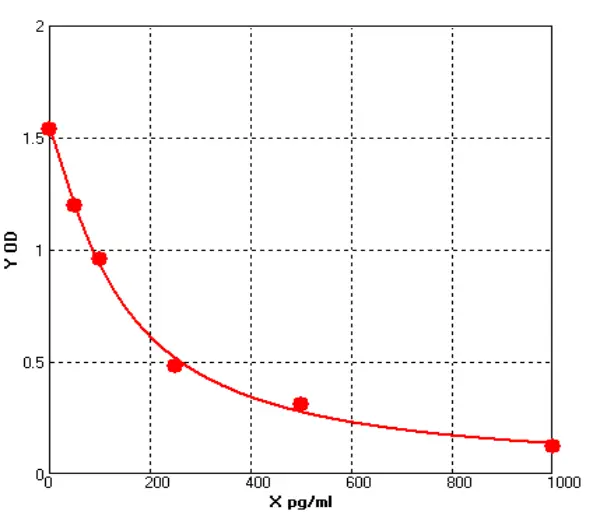
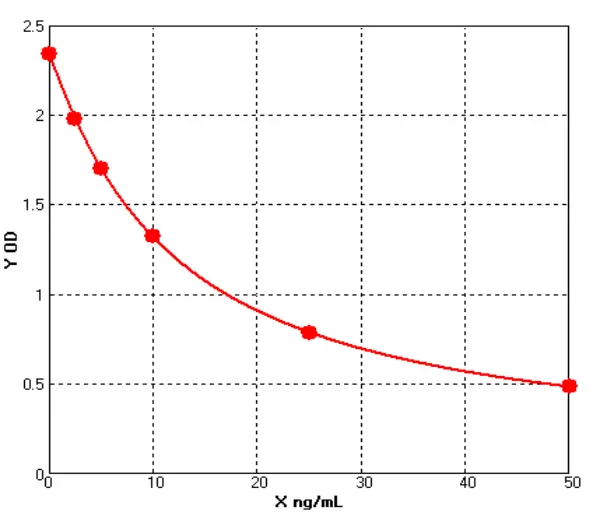
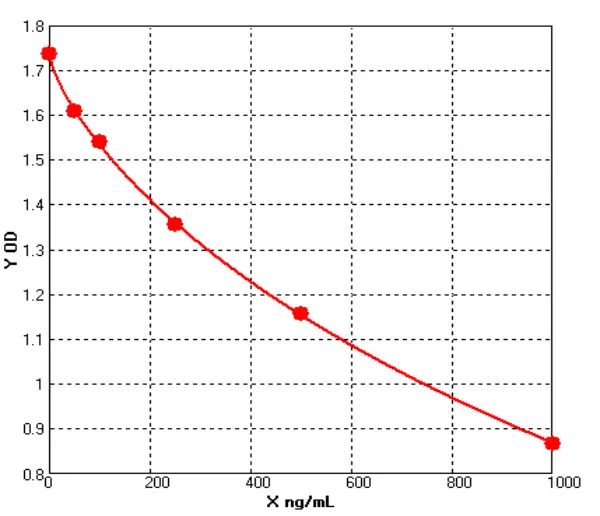
The High-five HCP ELISAis a double-antibody sandwich assay using an HRP-labeled secondary antibody. The standard curve range is 0-800 ng/mL, with a background control (Blank) of <0.15. The detection limit (DL) and quantification limit (QL) are 3.128 ng/mL and 12.5 ng/mL, respectively. The coefficient of variation (CV) is ≤10%, and excellent recovery rates (70%-130%) are achieved in various buffer systems. Stability at 4°C is ≥1 year. Specificity testing revealed that cross-reactivity of High-Five HCP with 293/E. coli 3s HCP is <2%, and no significant cross-reactivity was observed with E. coli 6s, X-33, GS115, or S. cerevisiae HCPs. Data are shown in Figure 4 and Tables 6-8.
Note:Original data sources are N251713-052, N251713-049, and N251713-049.
Figure 4
.png "High-Five_HCP_(1).png")
Table 6
Buffer | Components | Pass |
Buffer 1 | Tris+Isopropanol+Urea, pH 9.0 | √ |
Buffer 2 | NaCl + Arg + Triton100 + Urea | √ |
Buffer 3 | NaCl + Urea | √ |
Buffer 4 | NaCl + Arginine | √ |
Buffer 5 | NaC1 + Arginine + Ethylene Glycol | √ |
Buffer 6 | PBS + Trehalose + Tween-80 | √ |
Buffer 7 | Citric Acid,pH 3.5 | √ |
Buffer 8 | Trehalose | √ |
Buffer 9 | Tween-20 | √ |
*Data Source: N251713-052* | ||
Table 7
QC | Result | Pass |
DL | 3.125 | √ |
QL | 12.5 | √ |
Stability (4℃) | 1 year | √ |
CV | 7%-9% | √ |
*Data Source: N251713-049* | ||
Table 8
HCP | ng/ml | OD | Cross-reactivity |
293 HCP | 810 | 2.123 | 1.73% |
E.coli 3s HCP | 100 | 1.172 | 1.47% |
E.coli 6s HCP | 100 | 1.069 | 0.00% |
X-33 HCP | 800 | 1.127 | 0.10% |
GS115 HCP | 100 | 1.084 | 0.00% |
S. cerevisiae HCP | 400 | 1.063 | 0.00% |
*Data Source: N251713-049* | |||
Outlook
has focused on HCP research and product development for 15 years. To date, we have launched 12 categories, totaling 24 HCP system products. We also provide corresponding technical services, such as ELISA kit optimization, debugging, and coverage analysis. Our products have supported numerous drugs in reaching clinical stages and market approval.
Moving forward, we remain grounded in quality control, having weathered post-pandemic market fluctuations. We closely align with NMPA regulatory goals and update our detection technologies appropriately, keeping pace with the development stage of Chinese biopharmaceutical companies. We adapt to the realities of China's domestic industry, avoiding sudden specification shifts that could impose additional costs and unnecessary sacrifices, as well as burdens, on our clients. We consistently adhere to a problem-solving orientation, taking solid steps alongside our clients. Our commitment is to stay focused, specialized, and excellent.
Previous Articles:
New Launch – Mycoplasma qPCR Detection Kit (Fluorescent Probe Method)
HEK293 HCP ELISA: Fit for Viral Purification Processes, That’s What Truly Matters
Building a Quality & Safety Ecosystem for Biopharmaceuticals
Yeast Family: Pichia pastoris (GS115) HCP ELISA
Performance Comparison of HCP Products Between Cellgene and Cygnus
Ogataea polymorpha HCP ELISA
REFERENCES:
[1] Wickham TJ, et al. Screening of insect cell lines for the production of recombinant proteins and infectious virus in the baculovirus expression system.. Biotechnology progress. NaN. 8 (5): 391-6 .
[2] Davis TR, et al. Baculovirus expression of alkaline phosphatase as a reporter gene for evaluation of production, glycosylation and secretion.. Bio/technology (Nature Publishing Company). 1992. 10 (10): 1148-50.
[3] Wickham, TJ; Nemerow, GR. Optimization of growth methods and recombinant protein production in BTI-Tn-5B1-4 insect cells using the baculovirus expression system.. Biotechnology progress. NaN, 9 (1): 25-30 [2019].
[4] Granados RR, et al. A New Insect Cell Line from Trichoplusia ni (BTI-Tn-5B1-4) Susceptible to Trichoplusia ni Single Enveloped Nuclear Polyhedrosis. Virus. J. Invertebr. Pathol. 1994, 64: 260-266.
[5] Fu, Yu, et al. The genome of the Hi5 germ cell line from Trichoplusia ni, an agricultural pest and novel model for small RNA biology. eLife. 2018
[6] J.M. VLAK. Insect cell cultures: fundamental and applied aspects.
[7] Janin Korn et al. Baculovirus-free insect cell expression system for high yield antibody and antigen production. Scientific Reports.10: 21393. 2020.
[8] Grose C, Putman Z, Esposito D. A review of alternative promoters for optimal recombinant protein expression in baculovirus-infected insect cells. Protein Expr Purif. 2021. 186:105924.
[9] McLachlin JR, Miller LK. Stable transformation of insect cells to coexpress a rapidly selectable marker gene and an inhibitor of apoptosis. In Vitro Cell Dev Biol Anim. 1997. 33(7):575-579.
[10] Thomas A Kost. Fundamentals of Baculovirus Expression and Applications. Adv Exp Med Biol. 2016:896:187-97.
[11] Barry Buckland et al. Technology transfer and scale-up of the Flublok® recombinant hemagglutinin (HA) influenza vaccine manufacturing process. Vaccine. 2014.32(42):5496-5502.
[12] T J Wickham et al. Screening of insect cell lines for the production of recombinant proteins and infectious virus in the baculovirus expression system. 1992. 8(5).
[13] Kai Yu et al. Transcriptome analyses of insect cells to facilitate baculovirus-insect expression. Protein Cell. 2016. 7(5):373-382.
[14] 2015, Methods in Enzymology. Lukasz Skora et al. Insect Cell Culture.
[15] Sf21.2014, Animal Biotechnology. Anju Verma
[16] Enoch Y. Park et al. Comparative Characterization of Growth and Recombinant Protein Production among Three Insect Cell Lines with Four Kinds of Serum Free Media. Biotechnology and Bioprocess Engineering. 2003. 8(2):142-146.