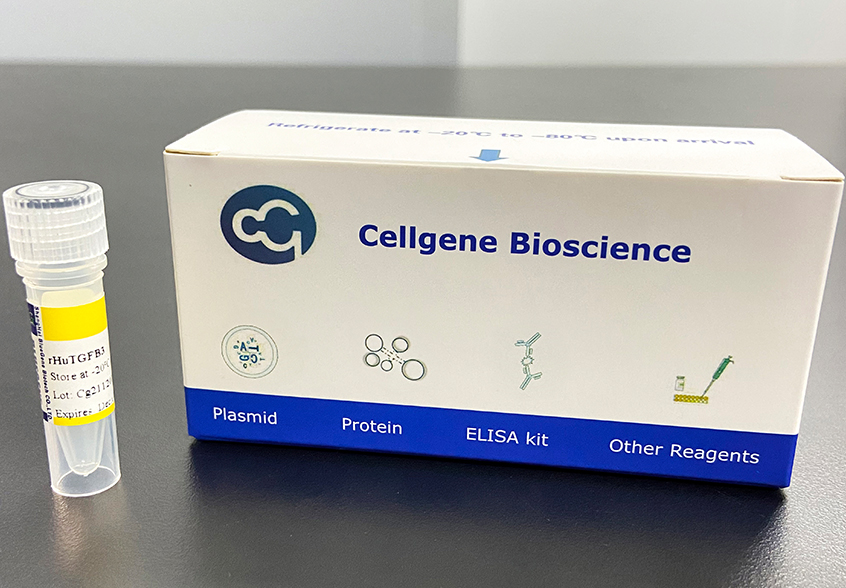
Fibroblast Growth Factor 10 (FGF10) can also be called Fibroblast growth factor 10,KGF-2,Keratinocyte growth factor 2.
Specifications Of P01F0221P-T2 Human Fibroblast Growth Factor 10 (FGF10) Protein, Recombinant
| Product Information | |
Catalog Number | P01F0221P-T2 |
Package Size | 10ug/50ug/500ug/1mg |
Other Names | Fibroblast growth factor 10,KGF-2,Keratinocyte growth factor 2 |
Protein & NCBI Number | O15520 |
Host | E.coli |
Express Region | Gln38-Ser208 |
Protein Sequence | QDMVSPEATNSSSSSFSSPSSAGRHVRSYNHLQGDVRWRKLFSFTKYFLKIEKNGKVSGTKKENCPYSILEITSVEIGVVAVKAINSNYYLAMNKKGKLYGSKEFNNDCKLKERIEENGYNTYASFNWQHNGRQMYVALNGKGAPRRGQKTRRKNTSAHFLPMVVHS |
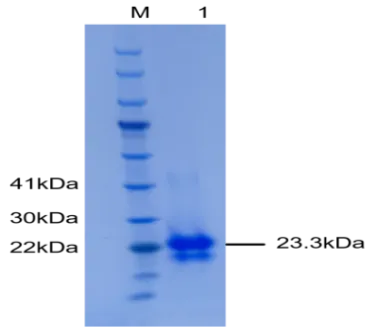
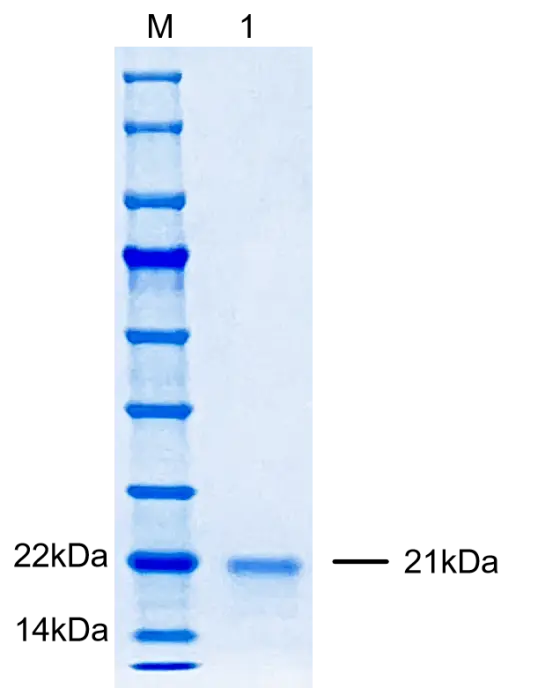
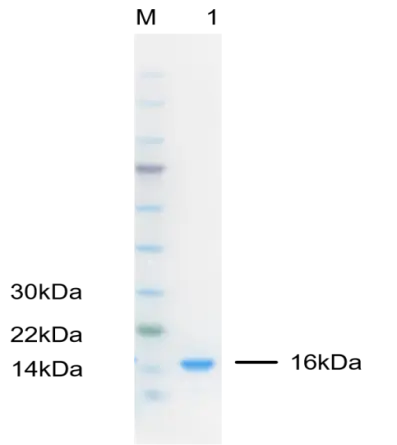
Molecular Weight | The protein consists of 319 amino acids (including the fusion tag), with a predicted molecular weight of 35.7kDa, and an actual molecular weight of approximately 38kDa. |
Fusion Tag | 6×His-SUMO (N-terminus) |
Purity | ≥90% SDS-PAGE |
Physical Property | Liquid |
components | 0.01M PBS+20% glycerol, sterile solution. |
Storage & Stability | After aliquoting, the stability of the samples can be maintained for up to 6 months at -20°C to -80°C, avoiding repeated freeze-thaw cycles. |
Applications | Antibody preparation, immunoassay (ELISA, WB), subcellular localization and interaction protein identification, etc. |
Lead Time | 5 to 10 business days; 2 to 3 days for stock products |
| Bioactivity | .jpg "HuFGF2_有标(1).jpg") .jpg "HuFGF2_有标(3).jpg") |
Background |
Fibroblast Growth Factor 10 (FGF10) is a member of the fibroblast growth factor (FGF) family, classified under the FGF7 subfamily. It shares structural similarities with other members such as FGF3, FGF7, and FGF22. FGF10 is a basic protein growth factor (bFGF) secreted by subcutaneous stromal cells and specifically stimulates various physiological processes in epithelial cells, including metabolism, regeneration, differentiation, and migration. During embryonic development, FGF10 plays a critical role in the morphogenesis of organs such as the lungs, mammary glands, prostate, and salivary glands, by promoting lung bud branching and glandular formation. It activates the MAPK signaling pathway to enhance cell proliferation and migration and engages the PI3K/Akt pathway to inhibit apoptosis and promote cell survival. FGF10 also interacts with cofactors such as heparan sulfate proteoglycans (HSPGs) and Klotho proteins to enhance signaling efficiency. FGF10 shows significant clinical potential. In chronic wounds, such as diabetic ulcers, it accelerates healing by promoting angiogenesis and epithelial regeneration. In neurodegenerative diseases like Parkinson’s disease and Alzheimer’s disease, it supports neuronal survival. While some members of the FGF family are implicated in tumorigenesis, targeted regulation of FGF10 may offer promising therapeutic strategies. |
Related Products Of Human Fibroblast Growth Factor 10 (FGF10) Protein, Recombinant
P01F0003P Human Fibroblast Growth Factor 2 (FGF2) Protein, Recombinant
P01F0003P-T2 Human Fibroblast Growth Factor 2 (FGF2) Protein, Recombinant
P01I0420P-T2 Human Insulin-like Growth Factor 1 Long R3 Analog (IGF1-LR3) Protein, Recombinant
P01E0032P Human Epidermal Growth Factor (EGF) Protein, Recombinant
P01V0016E-T3 Human Vascular endothelial growth factor 165 (VEGF165) Protein, Recombinant
P01F0073P-T2 Human Fibroblast Growth Factor 9 (FGF9) Protein, Recombinant
P01I0420P Human Insulin-like Growth Factor 1 Long R3 Analog (IGF1-LR3) Protein, Recombinant
P01E0032P-T2 Human Epidermal Growth Factor (EGF) Protein, Recombinant